The method
How we test
- Last updated
- 11 August 2026
- Applies to
- JBM APPAREL LLC, trading as Repset, at shopjbmapparel.shop
- Governing law
- State of Florida, USA
Why we publish methods
A rating is only worth reading if the next piece was judged the same way. “Squat proof” means nothing across two brands who tested in different light, at different angles, in different sizes. So the method is fixed, written down, and printed here — and every product page links back to this one.
Of the 45 pieces on this site, 13 are rated pass on the squat test and 2 are rated partial. We publish the partials because a customer who buys the wrong colourway without being told is a customer we have failed.
The squat coverage test
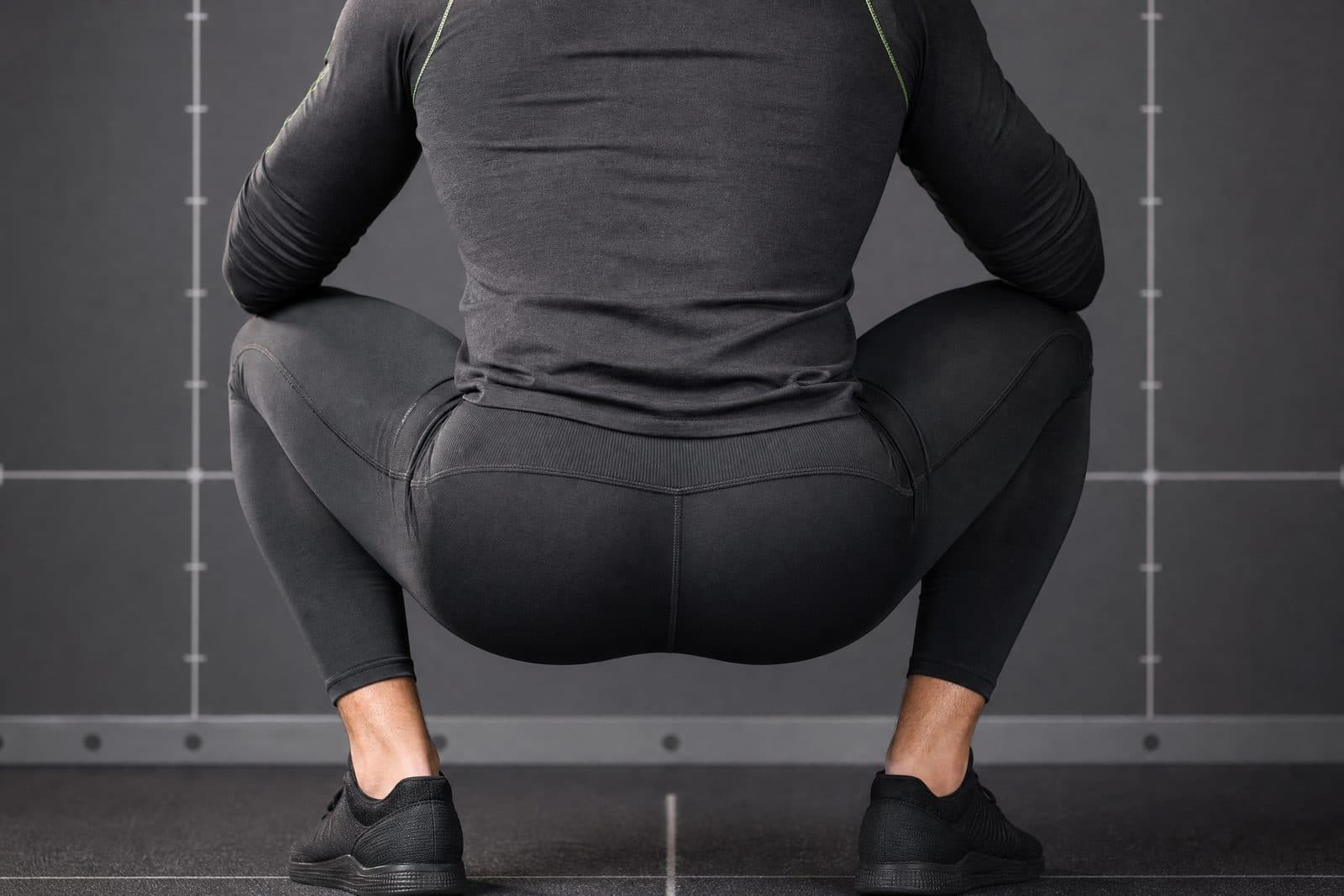
Conditions, fixed for every piece
- Base layer: a same-colour base layer under the garment. Not a contrasting one — a contrasting layer makes any fabric look worse, and a nude one makes it look better. Same colour is the honest middle.
- Position: a squat held at 90°, checked against a side-on reference so the hip crease is level with or below the top of the knee. Not a partial squat.
- Camera: square-on from behind, lens at hip height, two metres from the subject.
- Light: 750 lux, flat and even, measured at the garment. No directional key light, because a hard light from the side flatters a thin fabric.
- Coverage: every size in that piece’s run, and every colourway. Not one sample in a mid size.
- State: garments are tested new and again after five domestic wash cycles following our own care instructions. A rating only holds if both pass.
The three results
| Rating | What it means |
|---|---|
| Pass | The base layer was not visible through the fabric in any size or any colourway, new and after five washes. |
| Partial | It held in some sizes or colourways and not others. The exact combination that failed is written on the product page, along with what to wear it with instead. |
| Not tested | The piece is not a close-fitting leg garment, so the test does not apply. Woven shorts and loose pants sit here. |
The limits of a pass
A pass is a result under fixed conditions, not a warranty. Fabric behaves differently stretched over a size it was not cut for, in direct sun from behind, and after enough wash cycles. We never describe a garment as never sheer or completely opaque, and we do not use the word “guaranteed” anywhere near this test. If a piece lets you down, tell us — see when we get it wrong.
Support levels 1–4
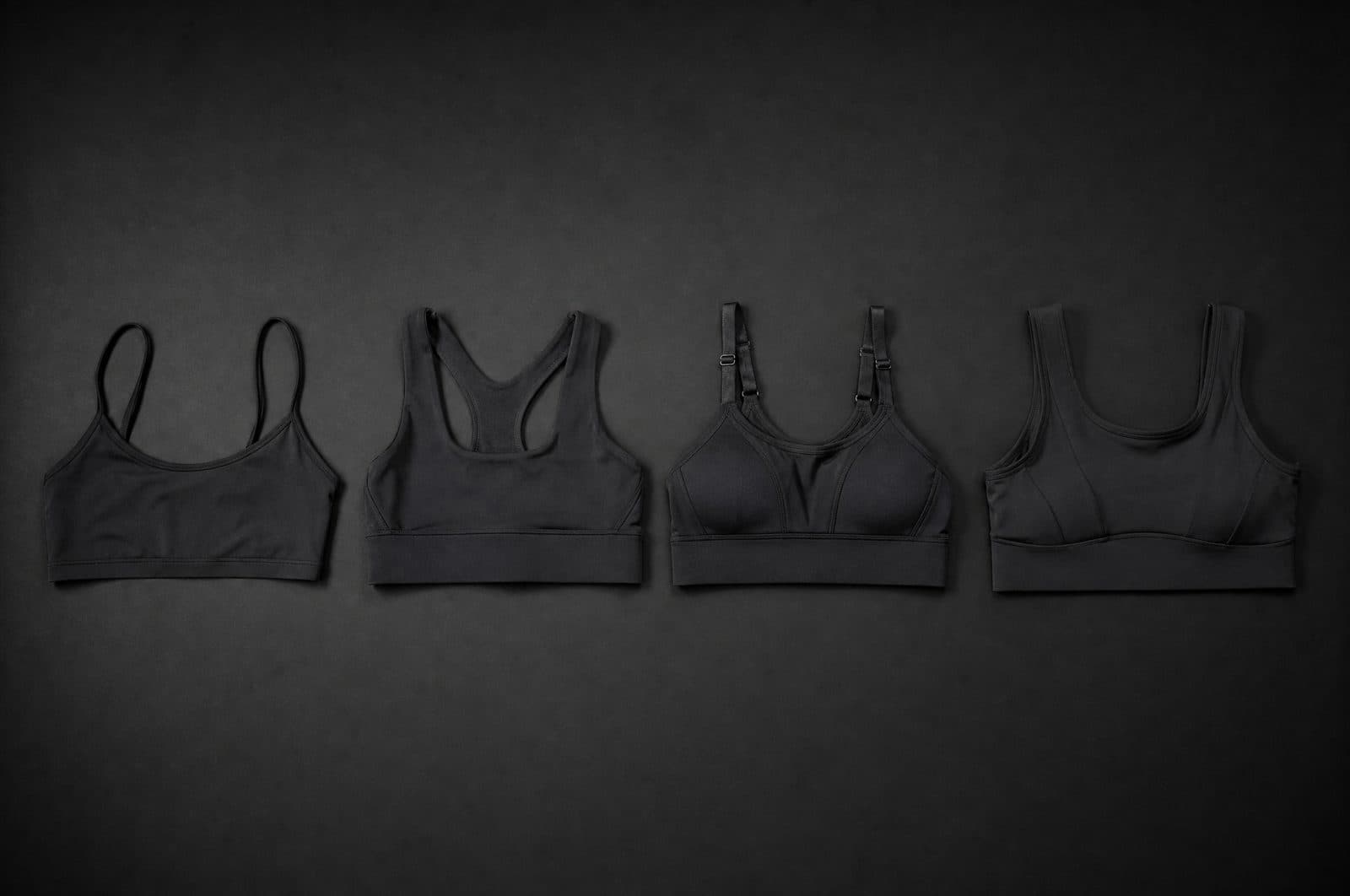
This is our own scale. We defined it to sort our own range. It is not a medical grading, it is not a clinical classification, and it does not map onto another brand’s numbering.
| Level | Construction | Assessed against |
|---|---|---|
| 1 — Low | Pull-on, 5 cm band, no adjustment, no encapsulation | Flow, stretching, walking, floor work |
| 2 — Light | Pull-on, 7 cm band, long-line body | Flow, floor work, lifting, walking |
| 3 — High | 7 cm band, adjustable straps, three-position hook-and-eye, encapsulated | Running, jumping, court sports |
| 4 — Max | 9 cm band, 3.5 cm straps, bonded encapsulation layer, four-position hook-and-eye | Distance running, sprint work, plyometrics |
The level is assigned from construction — band width, strap width, adjustment, encapsulation — and confirmed by wear-testing at the stated impact range across the size run. Fit matters more than the number: a level 4 in the wrong band size will do less for you than a well-fitted level 3. If you are between sizes, use fit help.
What the scale does not mean. None of these phrases will ever appear next to a bra on this site: prevents sagging or medical grade. Nor any claim that a garment protects tissue, reduces movement by a stated percentage, or has a preventive effect. Those are claims about the body, and we do not make claims about the body.
Seam mapping
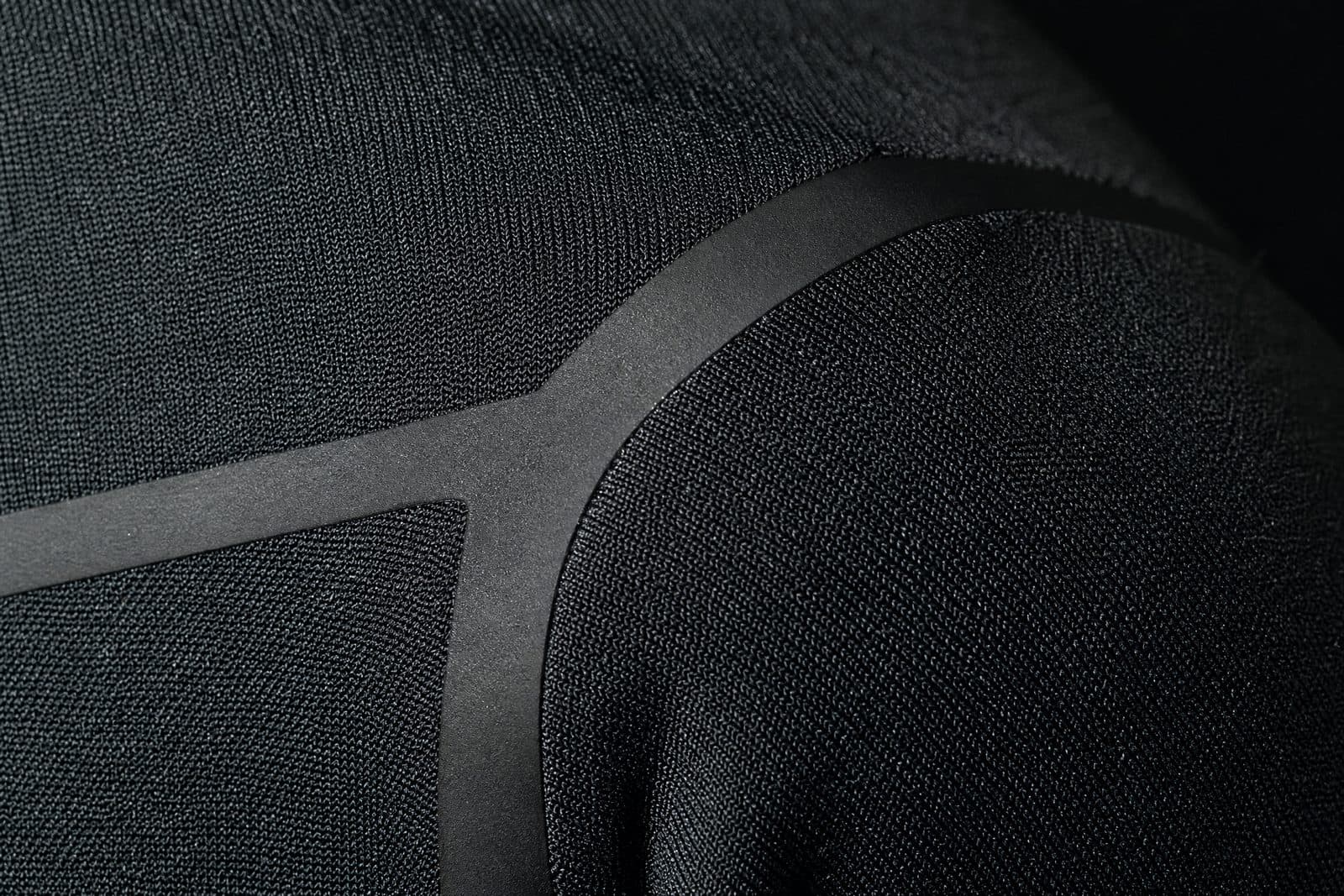
Chafing is a location problem, so the answer we publish is a location. For every piece we record two things: where there is no seam, and where the remaining seams sit.
The constructions we use, and what each one leaves behind:
- Bonded — panels joined with adhesive tape under heat and pressure. No stitch line and no ridge. Used through gussets and pocket bags.
- Laser-cut — the fabric edge is sealed by the cut, so there is no hem and no elastic band. Used on brief leg openings.
- Knitted in the round — no side seam at all, because the fabric was never two pieces. Used on briefs and the compression short body.
- Flatlock — a stitched join pressed flat rather than standing proud. Used where a seam is unavoidable, such as a bra underband.
- Offset — a conventional seam moved away from a rub point, usually 2–3 cm rearward on a side seam or outward on an inseam.
Every product page prints its own map. Where a page says “no centre-front seam”, it means the front panel is a single piece of fabric.
Stretch direction
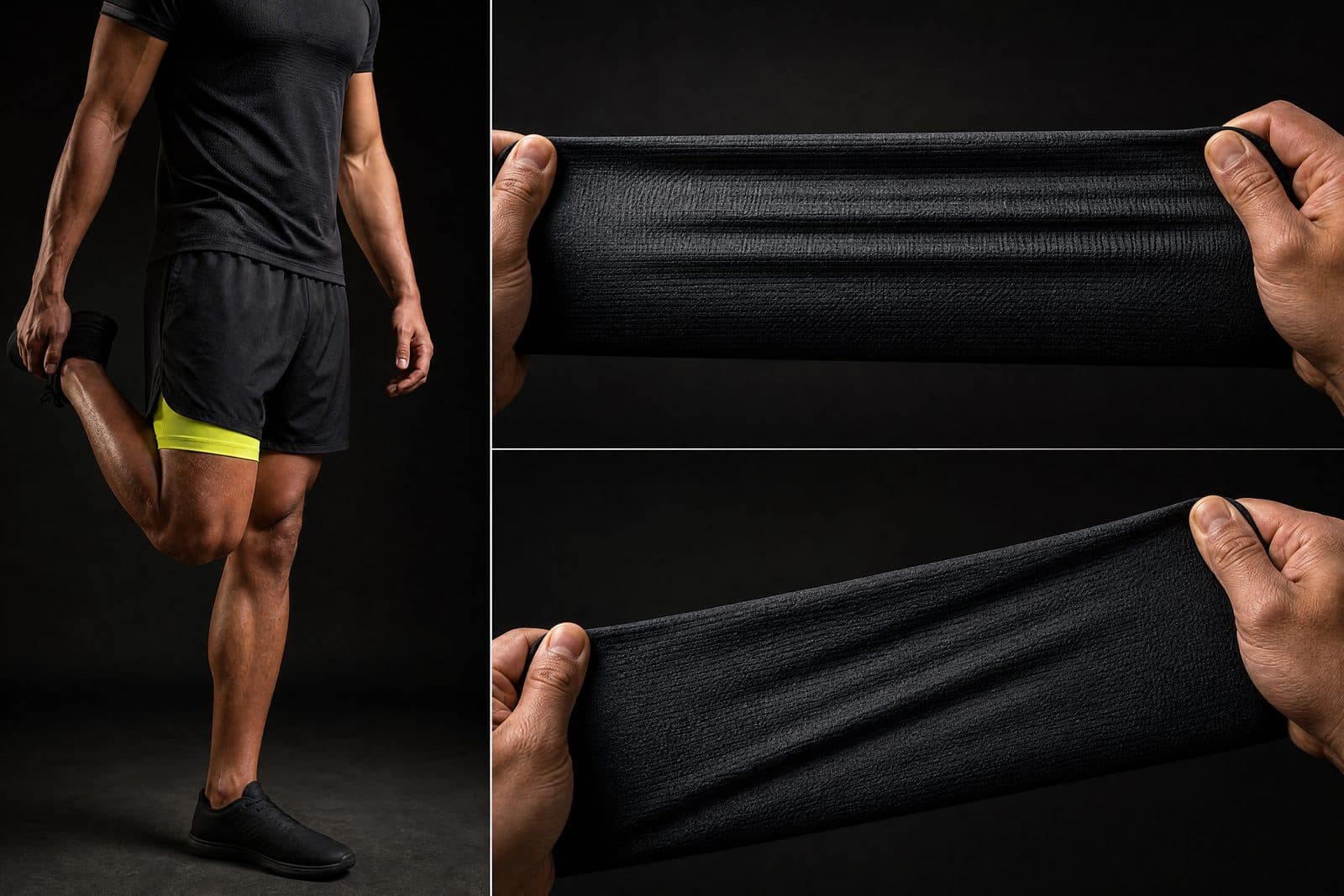
- 2-way — the fabric stretches and recovers along one axis, usually across the body. Enough for a woven short or a stable warm-up.
- 4-way — it stretches and recovers along both axes. What a deep squat or a full overhead reach needs, because the fabric has to give in two directions at once and come back.
- Non-stretch — shells and vests where the fit comes from the cut.
Recovery is assessed by extending a swatch to 40% and holding it for 30 seconds, ten times, then measuring residual growth. A fabric that stretches but does not come back is a fabric that bags at the knee, and we do not put it in a legging.
Fabric weight and pilling
Weight is grams per square metre, measured on conditioned fabric with a calibrated die cutter and balance. It is the single most useful number for predicting how a piece feels: 78 g/m² is a singlet you barely notice, 260 g/m² is a legging that holds its shape, 420 g/m² is a hoodie that keeps you warm standing still.
Pilling is graded to ASTM D3512 with a 30-minute tumble, assessed against photographic standards on a 1 to 5 scale where 5 is no change. We publish the grade and the method together, because a grade without a method is a number with nothing behind it. Nothing we sell grades below 3–4.
Drying time
Where a page gives a drying time, it was measured like this:
- Garment saturated to 100% of its own dry weight in water.
- Excess removed under a standard spin, then hung on a non-absorbent form.
- Ambient conditions held at 22 °C and 55% relative humidity, still air, no fan.
- Weighed at intervals; the time recorded is when residual moisture reaches 10%.
This is a comparison number between our own fabrics, not a promise about you. A session is not a laboratory, and how a garment feels depends on the weather, your effort and how much you sweat. We will tell you which of our fabrics dries faster. We will never tell you that a garment keeps you dry, and we do not describe anything we sell as sweat-proof.
Water resistance
Our shells carry a non-fluorinated durable water repellent finish on the face fabric. That sheds light splash and short drizzle. We never describe one as fully waterproof.
None of them is waterproof. There is no membrane, there is no hydrostatic head rating, and the seams are stitched rather than taped. In sustained rain they will wet through. We say “splash-resistant” and we mean only that. The finish is not permanent and will need reactivating in a tumble dryer on low, and eventually reproofing, as the care instructions say.
Reflective trim
Where a piece has reflective trim, we publish its position, its dimensions and its material — glass-bead retroreflective film on a polyester backing, in every case.
We make no visibility claim. Whether you are seen depends on the light, the angle, the weather, and whether the other party is looking. Nothing we sell is certified personal protective equipment, and none of it is a substitute for lights or for riding and running as though you have not been seen.
What we do not claim
Stated plainly, once, and it applies to every page on this site. Each phrase below is on a list the build checks the entire source tree against — a single match anywhere fails the compile, so these are enforced rather than intended.
- Nothing here is medical. These words will never appear about a garment we sell: improves circulation, speeds recovery, reduces lactic acid, prevents injury, relieves pain, reduces soreness, burns fat, slimming or detox. Compression figures are a pressure measurement and nothing more. Support levels are a construction scale and nothing more.
- Nothing here is antimicrobial. No antibacterial, antimicrobial or anti-odour treatment is applied to any piece we sell, and we make no claim of that kind. Our fabrics are structured to breathe and they can be machine washed. That is the whole story.
- Nothing here is absolute. No garment on this site is described as never sheer, completely opaque, guaranteed visibility or fully waterproof.
- Nothing here makes you better at anything. No claim that a piece boosts performance, increases endurance or increases strength. Not your speed, not your strength, not your endurance. It is clothing that stays where you put it.
These are not stylistic choices. Claims about the body are regulated, claims about treating a textile against bacteria are regulated, and an absolute claim we cannot honour at every size and every wash is a claim we should not make. If you ever find copy on this site that crosses one of these lines, tell us and we will remove it.
When we get it wrong
If a piece rated pass has let you down, we want to know, and it is not a complaint we treat as an ordinary return. Send us the size, the colourway and, if you are willing, a photograph, to support@jbmapparel.shop. We refund or replace it, we re-run the test on that size and colour, and if the result changes we change the rating on the product page — and email everyone who bought that size and colourway to tell them it changed.
Ratings that have been revised are dated on the product page. We would rather show a downgrade than pretend the first result was right.
Questions about this policy
Write to support@jbmapparel.shop or call +1 818 731 8640, Monday to Friday, 9:00–17:00 Eastern Time. Post reaches us at JBM APPAREL LLC, 2439 Chateau Loop, Kissimmee, FL 34741, USA. There is also a contact form.